
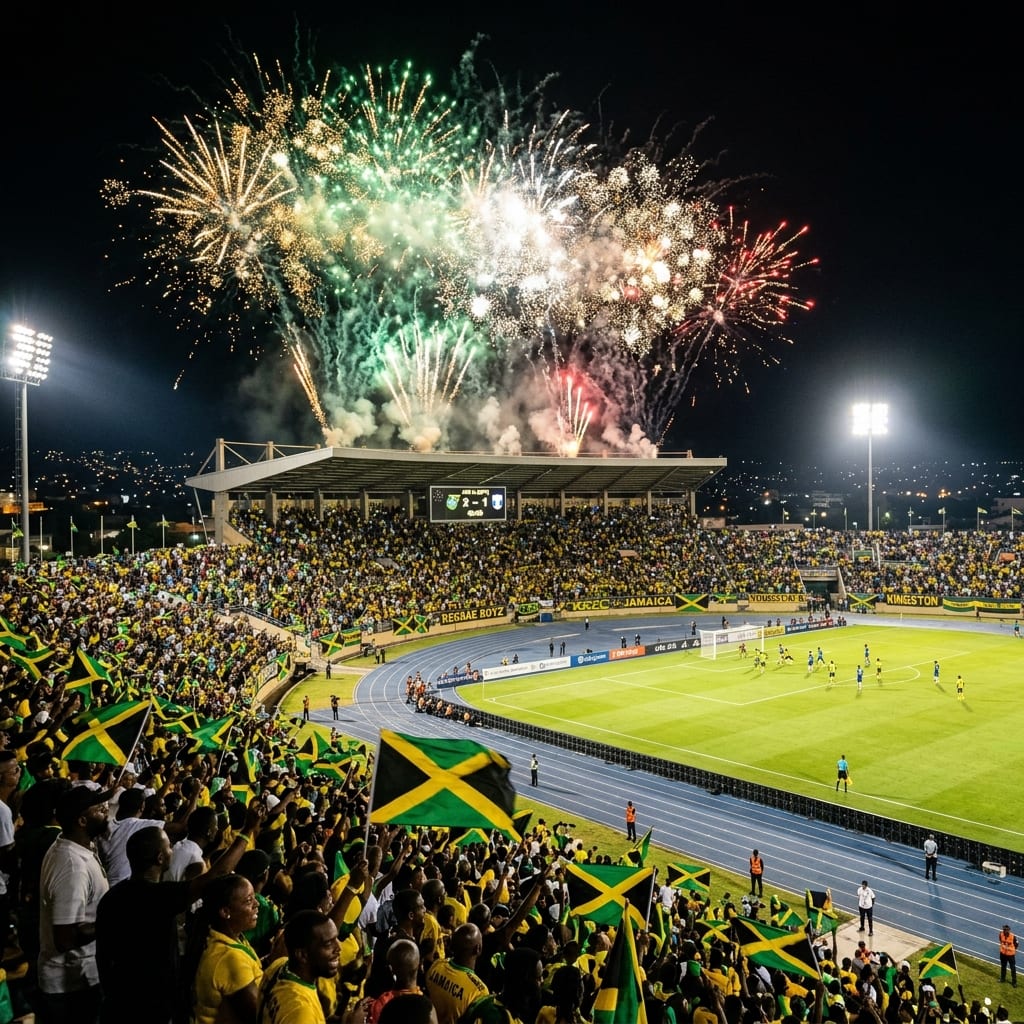
Jamaica's confirmation as a co-host nation for the 2031 FIFA Women's World Cup represents the most significant moment in Jamaican football history since the Senior Reggae Boyz qualified for the 1998 FIFA World Cup in France. For the Reggae Girlz — the country's women's national team — it is both a culmination of their rapidly growing status in international football and the beginning of a new chapter that could permanently transform the sport in Jamaica.
The Historic Significance
Jamaica made history in 2019 as the first Caribbean nation ever to qualify for the FIFA Women's World Cup, a breakthrough that generated enormous national pride and international attention. The Reggae Girlz, led by players including Khadija Shaw — who has since become one of the most prominent attacking players in the world through her performances for Manchester City — announced to the world that Caribbean women's football had arrived.
Since that 2019 debut, Jamaica has continued to develop its women's programme, making further World Cup appearances and consistently producing talent that attracts attention from clubs in the Women's Super League, the NWSL in the United States, and leagues across Europe. The national team's growth has been built on a combination of homegrown talent and the eligibility of diaspora players — Jamaican-heritage women born and raised in the United States, Canada, and the United Kingdom who have chosen to represent the land of their heritage.
What Co-Hosting Means in Practice
As a co-host nation, Jamaica will receive a portion of the 2031 tournament's matches to be played on the island. This means significant infrastructure investment in the coming years. FIFA and co-host federations are expected to contribute to stadium upgrades, training facility improvements, transportation infrastructure around venues, and the broader hospitality infrastructure required to accommodate thousands of visiting fans.
The National Stadium in Kingston — which has just received its World Athletics Class One certification — is the primary candidate for hosting Women's World Cup matches. Additional venues around the island may also be upgraded and designated as training facilities or secondary match venues, depending on the tournament's final format.
For a country that has long had infrastructure as one of its primary barriers to hosting major international sporting events, the combination of FIFA investment for the Women's World Cup and World Athletics certification for the National Stadium represents a double breakthrough that could fundamentally upgrade Jamaica's sporting venue landscape by 2031.
Economic Impact Projections
The economic impact of hosting Women's World Cup matches extends far beyond the tournament itself. The five-year preparation period — which will see construction contracts awarded, training academies upgraded, and international awareness of Jamaica as a football destination grow — brings economic activity across multiple sectors.
The Jamaica Tourist Board has already begun incorporating the 2031 World Cup into its long-term marketing strategy, targeting football fans in traditional Jamaica tourist source markets: the United States, the United Kingdom, Canada, and increasingly continental Europe. Women's football has one of the fastest-growing fan bases in world sport, and the Reggae Girlz have admirers across Europe particularly, given the number of Jamaican-heritage players who feature in top European leagues.
Estimates from similar-scale tournaments suggest that co-host nations can expect direct tourism revenue of US$80 million to US$150 million from visiting fans and media during the tournament period, along with hundreds of millions in infrastructure investment and the long-term branding value of being associated with a marquee global sports event.
What It Means for Jamaican Girls
Beyond the economics and the infrastructure, there is a human story at the heart of the 2031 announcement: what it means for the next generation of Jamaican girls watching football in schools, on community fields, and in living rooms across the island.
When Jamaica made history in 2019, applications to join youth football academies across the country spiked measurably. The sight of the Reggae Girlz competing on the world's biggest stage — and winning — sent a message to thousands of young Jamaican women that football was a path worth pursuing, and that Jamaica could compete at the highest level.
The 2031 World Cup will amplify that message many times over. Having World Cup matches played in Kingston, at a certified international stadium, with the Reggae Girlz as hosts and (the nation hopes) competitors, will create a generation-defining moment for Jamaican women's sport. The investment in facilities, coaching, youth development programmes, and international partnerships that will accompany the tournament is also likely to create a lasting infrastructure for women's football development on the island that outlasts the tournament by decades.
The Road to 2031
There is still significant work to be done. Jamaica's women's programme, while growing rapidly, will face stiff competition in future World Cup qualifying campaigns from nations with far larger player pools and more established domestic leagues. The Under-14 national boys' team's strong showing in the Caribbean Football Union Tier 1 Challenge Series is an encouraging sign of the depth developing in Jamaican football, but the women's programme will need continued investment to ensure that the Reggae Girlz are competitive in 2031 — not merely hosts, but contenders.
The Jamaica Football Federation, government sporting authorities, and private sector sponsors all have a role to play in making that happen. The 2031 announcement is not a destination — it is a starting gun. Jamaica has five years to build the programme, the infrastructure, and the culture necessary to make the Women's World Cup on home soil one of the great moments in the island's sporting history.
If the Reggae Girlz — and the girls watching them right now — have anything to say about it, they will be ready.