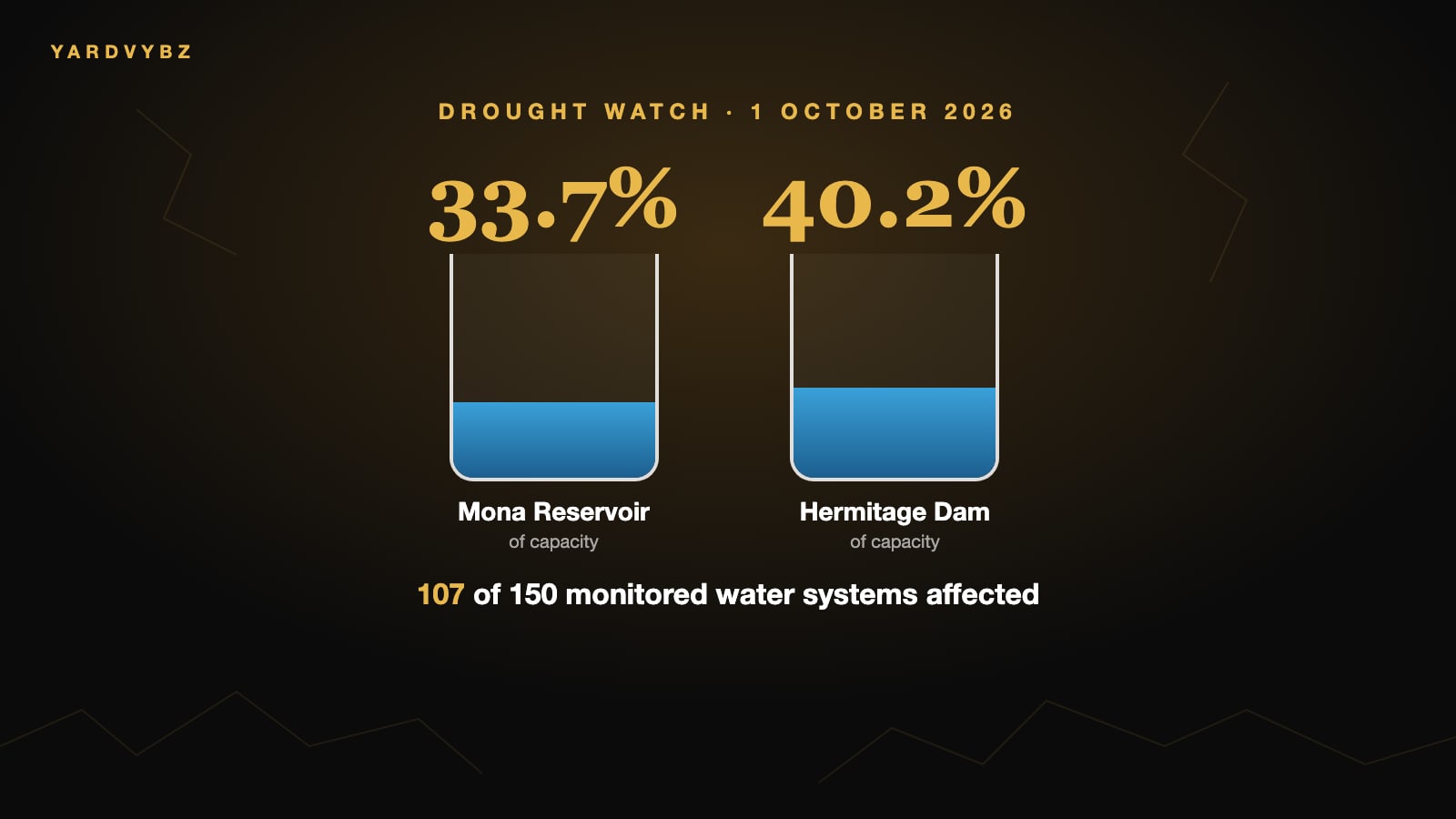
Jamaica's drought is no longer confined to the Corporate Area. The National Water Commission (NWC) says 107 of the 150 water systems it is monitoring across the island are now affected by dry conditions, and the minister responsible for water has warned that tougher restrictions are on the way.
The figures were reported by The Gleaner on Thursday, 1 October, citing Dr Phillippa Campbell-Francis, the NWC's acting vice-president of operations. She said the affected systems are at varying stages, with some facilities down to zero per cent of capacity and others at about 40 per cent.
Where the reservoirs stand
The two facilities that supply most of Kingston and St Andrew are both well under half full:
- Mona Reservoir: 33.7 per cent of capacity
- Hermitage Dam: 40.2 per cent of capacity. Hermitage supplies more than 40 per cent of the Kingston Metropolitan Area and St Andrew.
The speed of the decline at Mona is the worrying part. On 10 August the reservoir was reported at 54.5 per cent. By 16 September it had fallen to 35.9 per cent, and it has since slipped to 33.7 per cent. That is a drop of more than 20 percentage points in under two months. Hermitage has held steadier, moving from 40.7 per cent to 40.2 per cent over the same period.
Beyond the Corporate Area, the NWC named St Thomas and the parishes of the north-east among the hardest hit.
The restrictions already in place
If you are an NWC customer, these rules already apply:
- Prohibition orders have been in force since 17 August in seven parishes: Kingston, St Andrew, St Thomas, St Mary, Portland, St Ann and St Catherine. They ban the use of NWC-supplied water for non-essential purposes such as watering lawns, washing vehicles and filling or refilling pools.
- Scheduled supply for customers on the Mona system began on 17 September, with water provided between 6:00 a.m. and 4:00 p.m. daily.
Water Minister Matthew Samuda has said stricter measures will follow in the coming weeks. He has also said, according to The Gleaner, that the current El Niño is set to produce the worst drought Jamaica has experienced.
Why it is this bad
El Niño is a periodic warming of the Pacific Ocean that shifts weather patterns worldwide. In the Caribbean it suppresses the rising air and thunderstorms that normally bring rain. This year's event has strengthened during what should be the wetter part of Jamaica's year.
There is also a problem that has nothing to do with the weather. Roughly 70 per cent of the water the NWC produces is classed as non-revenue water, meaning it is lost to leaks, theft or metering failures before it earns anything. The target is 30 per cent. The programme to get there is planned to run for 11 years: one year of audit, five years of works and five years of maintenance. In a drought, every litre lost from an old pipe is a litre that never reaches a home.
The knock-on effects
The drought is reaching well beyond household taps. Agriculture, forestry and fishing output fell 15.3 per cent in the April to June quarter, according to preliminary Planning Institute of Jamaica estimates, with the drought named alongside Hurricane Melissa as a cause. Lower crop yields are feeding into food prices, and the Bank of Jamaica cited El Niño conditions among the reasons it raised its policy rate to 6.0 per cent this week.
How to stretch your supply
With scheduled supply likely to widen, a few habits make a real difference:
- Store safely. Fill covered, clean containers during supply hours. Keep drinking water separate, and keep containers sealed to stop mosquitoes breeding.
- Fix leaks now. A dripping tap or running toilet cistern wastes water around the clock. Check your meter with every tap off. If it is still turning, you have a leak.
- Reuse where you can. Water from rinsing vegetables or laundry can flush toilets or go on plants.
- Shorten showers and turn off the tap while soaping, shaving or brushing teeth.
- Report leaks and broken mains to the NWC rather than assuming someone else has.
- Follow the prohibition orders. Washing a car with a hose or topping up a pool with NWC water is prohibited in the seven listed parishes.
What happens next
Officials had earlier expected dry conditions to last into September or October. With reservoir levels still falling at the start of October, the next few weeks of rainfall will decide whether the restrictions ease or tighten. We will update this story as the NWC announces new measures.