Legalized Loan Sharks: How Micro-Lenders Exploit Jamaicans Under the BOJ's Watch
In Jamaica, where traditional banking is often inaccessible to the average working-class citizen, a massive, shadow financial sector has emerged: the micro-lending industry. Plastered across billboards, social media, and storefronts are promises of "fast cash," "no credit checks," and "same-day approval." For Jamaicans facing medical emergencies, school fee deadlines, or the need to bridge the gap between paychecks, these institutions appear as saviors.
However, beneath the brightly colored marketing lies a highly predatory industry that thrives on the desperation of the working class. And the most shocking part? Ninety-nine percent of these micro-lending institutions operate under the regulatory umbrella of the Bank of Jamaica (BOJ). Yet, they are allowed to issue contracts and employ collection tactics that border on extortion, while the regulatory bodies turn a blind eye.
The Anatomy of a Predatory Contract
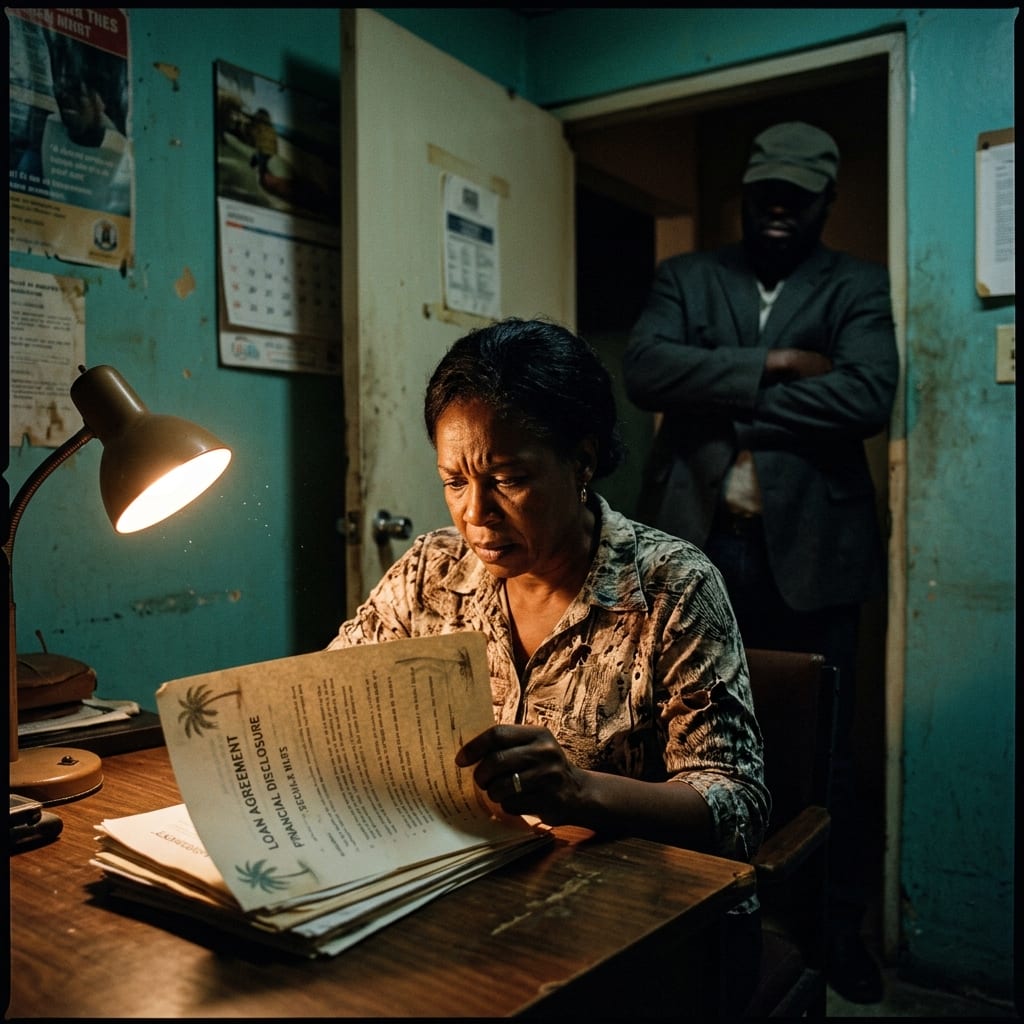
The trap begins the moment the borrower signs the paperwork. The contracts issued by many of these micro-lending companies are masterpieces of predatory design. They are laden with exorbitant interest rates, hidden fees, and punitive clauses that are designed to ensure the borrower remains trapped in a cycle of debt.
The language is intentionally convoluted, masking the true cost of the loan. If you were to upload one of these loan contracts to an AI like ChatGPT and ask it to analyze whether the terms are predatory, the answer would be a resounding, unequivocal "Yes." The mathematics of these loans are often structured so that a borrower can pay back the principal amount twice over and still owe more than they initially borrowed due to compounding interest and late fees.
These companies do not assess a borrower's true ability to repay; they rely on the fact that if the borrower defaults, they can unleash a campaign of terror to extract the money. The business model is not built on fair financial services; it is built on the exploitation of vulnerability.
The Bailiff Bluff: Intimidation as a Business Strategy
When a borrower inevitably defaults on these heavily skewed loans, the true nature of the micro-lending industry is revealed. The collection tactics employed are not just aggressive; they frequently cross the line into illegal harassment and psychological warfare.
The most egregious and common tactic is the threat of the "bailiff." Collection agents will bombard borrowers with calls, texts, and letters, explicitly threatening to send a bailiff to their home or place of work to seize their assets, embarrass them in front of their neighbors, or even have them arrested.
What the majority of the Jamaican public does not know—and what these companies rely on them not knowing—is that a bailiff is an officer of the court. A private lending company cannot simply hire a bailiff and send them to your house. Only a judge, through an official court order, can authorize a bailiff to seize property.
By weaponizing the term "bailiff," these companies are intentionally misleading and terrorizing citizens. They hire aggressive private collectors who pose as legal authorities, creating a climate of immense fear and anxiety. They will show up at people's workplaces, jeopardizing their employment, and harass family members.
While it is indisputable that the money is owed to the company, owing a debt does not strip a citizen of their rights. As a corporate entity operating in Jamaica, you cannot treat people like animals. There must be a baseline of humanity and legal compliance in debt collection, regardless of the amount owed.
The Silence of the Bank of Jamaica
The rampant abuse within the micro-lending sector begs a critical question: Where is the regulator?
The Bank of Jamaica (BOJ) is tasked with overseeing the financial sector, ensuring stability, and protecting consumers. Yet, when it comes to the micro-lending industry, the BOJ appears completely indifferent to the plight of the borrower. They license these institutions, but they do not police their predatory contracts or their illegal collection tactics.
If a citizen tries to challenge a micro-lender based on the protections outlined in the Moneylending Act—which dictates maximum interest rates and fair practices—they are routinely ignored by both the lending company and the regulatory authorities. Filing a complaint with the BOJ about the harassment or the illegal threats of fake bailiffs usually results in bureaucratic silence.
Once again, the recurring theme of Jamaican institutions emerges: nobody wants to do their job. The BOJ seems content to allow these legalized loan sharks to operate with impunity, prioritizing the profitability of the financial sector over the financial security and mental well-being of the Jamaican people.
Demanding Accountability
The current state of the micro-lending industry is a systemic failure that disproportionately punishes the poor and working class. It is a system that allows wealth to be aggressively extracted from those who have the least, using fear and deception as primary tools.
The Bank of Jamaica must wake up from its regulatory slumber. It must aggressively audit the contracts being issued by these institutions and enforce the strict parameters of the Moneylending Act. Furthermore, the use of fake "bailiffs" and aggressive, public harassment must be criminalized, and companies found guilty of these tactics must face the revocation of their licenses.
Until the BOJ decides to care about the borrower and enforce the law, Jamaicans must educate themselves. We must understand that debt collectors are not court officers, that predatory contracts can be challenged, and that the shame of debt should never outweigh our fundamental human rights. The era of the legalized loan shark must be brought to an end.