
Left in the Dark: The Toothless Rent Board and Jamaica's Housing Crisis
Shelter is a fundamental human right, a basic necessity that forms the foundation of a stable and productive life. Yet, for many working-class Jamaicans, renting a home is less about finding sanctuary and more about navigating a battlefield. The relationship between landlords and tenants in Jamaica is often characterized by a severe power imbalance, marked by disrespect, intimidation, and a shocking lack of accountability. At the center of this crisis is a regulatory body that appears entirely paralyzed: the Rent Assessment Board.
The reality on the ground is starkly different from the protections promised on paper. When tenants face emergencies, abuse, or illegal actions by landlords, the institutions designed to protect them are largely absent, leaving vulnerable citizens to fend for themselves in a system that heavily favors property owners.
The Illusion of Protection: A Missing Rent Board
The Rent Assessment Board was established to mediate disputes, ensure fair pricing, and protect the rights of both landlords and tenants. However, the lived experience of countless Jamaicans suggests that the Board is little more than a bureaucratic ghost.
Try contacting the Rent Board during a crisis. If a landlord is threatening illegal eviction, locking you out, or cutting off your utilities—actions that demand immediate intervention—getting a timely response from the Board is nearly impossible. They operate on a lethargic timeline that completely ignores the urgency of housing emergencies.
Furthermore, when reports are finally filed, there is a notorious lack of follow-up. The Board frequently fails to investigate complaints thoroughly or ensure that disputes are actually resolved. Tenants are left hanging in bureaucratic limbo, forced to continue living in hostile environments while their complaints gather dust on a desk. The message sent to tenants is clear: you are on your own.
The Weaponization of Debt and Landlord Impunity
The true ugliness of the Jamaican rental market rears its head when financial difficulties arise. The economy is harsh, job security is often fragile, and unexpected emergencies can quickly drain meager savings. When a tenant, who has perhaps been laid off or is facing a medical crisis, falls behind on rent, the situation often devolves rapidly.
Instead of treating unpaid rent as a civil, economic matter, many landlords treat it as a profound moral failure and an excuse to strip the tenant of their dignity. Oweing rent does not revoke a person's human rights, yet landlords frequently act as if it does. There is a pervasive attitude among property owners that their ownership of the building gives them ownership over the tenant's peace of mind.
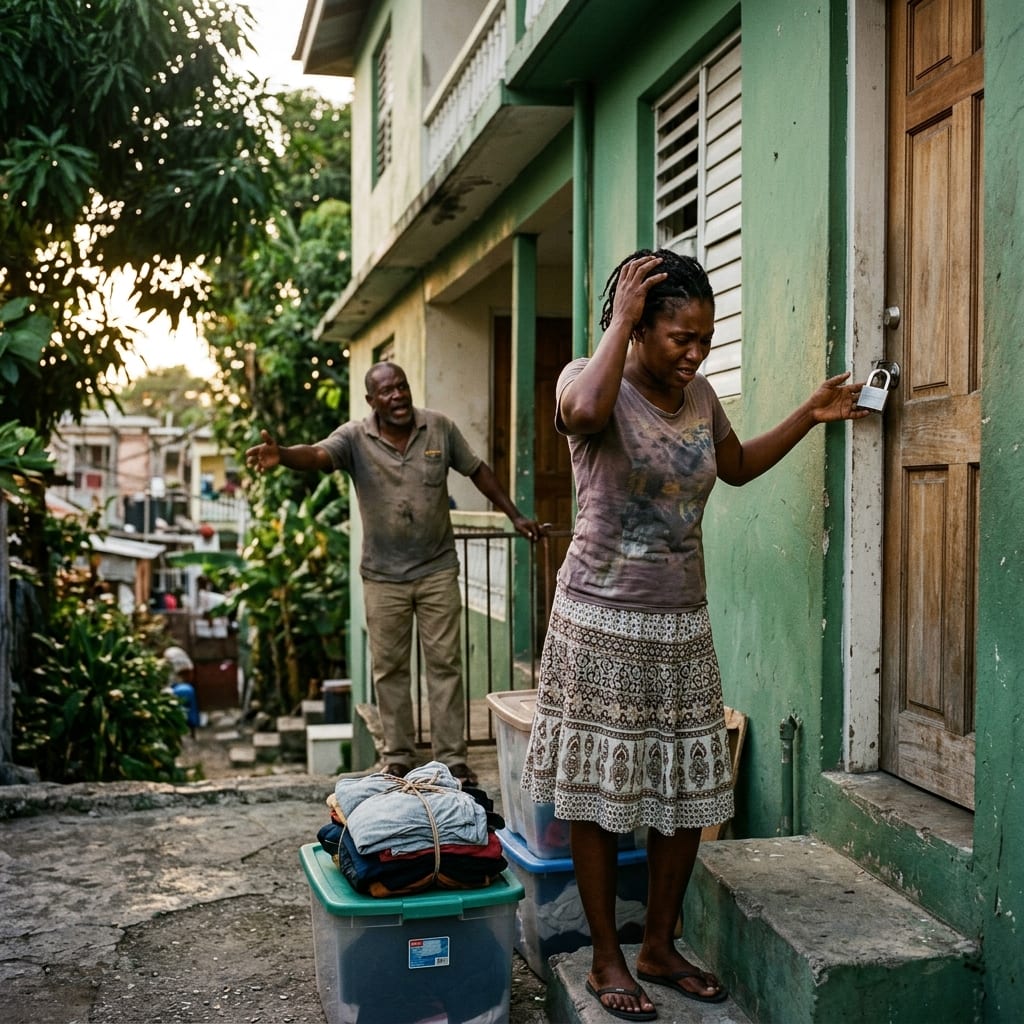
This manifests in deeply disrespectful and public forms of humiliation. It is a common, everyday occurrence in Jamaica for landlords to arrive at a property screaming, threatening to "take off the doors," and loudly berating the tenant in front of their neighbors and children. They will broadcast the tenant's financial struggles to the entire compound, accusing them of "living free" and intentionally inflicting immense psychological stress on families who are already struggling to survive.
Adding to the stress of a lost job and hungry children, this public shaming does nothing to solve the financial problem. It only exacerbates the crisis, pushing desperate people to the brink.
Extrajudicial Tactics: Water, Light, and Violence
Because landlords know that the Rent Board is ineffective and that there are virtually no consequences for their actions, they routinely bypass the legal eviction process and resort to illegal, extrajudicial tactics to force tenants out.
Consider the all-too-common scenario: a father of two young babies loses his job and falls one month behind on rent. The landlord, rather than serving a legal notice, decides to lock the water tank, depriving the family of access to basic sanitation and drinking water. Next, they turn off the electricity. When the desperate father calls the Rent Board for help, the response is a dismissive, "We can't do anything about it."
These actions are not just illegal; they are cruel and inhumane. Yet, they happen with alarming frequency because the regulating bodies simply do not want to do their jobs. The apathy of the government agencies emboldens landlords to act as laws unto themselves.
This toxic dynamic is a powder keg. When you corner a person who is trying hard to provide for their family, strip them of their dignity, cut off their basic utilities, and deny them any legal recourse, you are creating a recipe for violence. The systemic failure to mediate these disputes effectively forces people into desperate, confrontational situations that can escalate quickly and tragically.
A System Built on Prejudice
There is also a subtle but undeniable prejudice built into the system's response. When tenants do manage to get the attention of authorities, they often find that the officials sympathize with the landlord. The immediate question is always, "When are you going to pay the rent?" while the landlord's illegal and abusive tactics are ignored or tacitly approved. The system operates on the assumption that the property owner is inherently right and the struggling tenant is inherently at fault.
This prejudice ignores the reality of the Jamaican economy, where hard-working people can find themselves destitute through no fault of their own. It treats poverty as a crime and allows landlords to act as the punishing officers.
Uprooting the Systemic Rot
The situation with the Rent Board and landlord-tenant relations is not just a series of isolated incidents; it is a systemic rot that needs to be addressed urgently. A nation cannot claim to care about human rights when it allows its citizens to be subjected to psychological abuse, illegal utility shut-offs, and arbitrary eviction without consequence.
The government must overhaul the Rent Assessment Board, giving it the resources, mandate, and teeth to enforce the law rapidly. Landlords who engage in illegal lockouts, utility tampering, and harassment must face severe, swift legal penalties. Until the government decides to actually do its job and hold property owners accountable, working-class Jamaicans will continue to be left in the dark, fighting for basic dignity in the place they call home.