
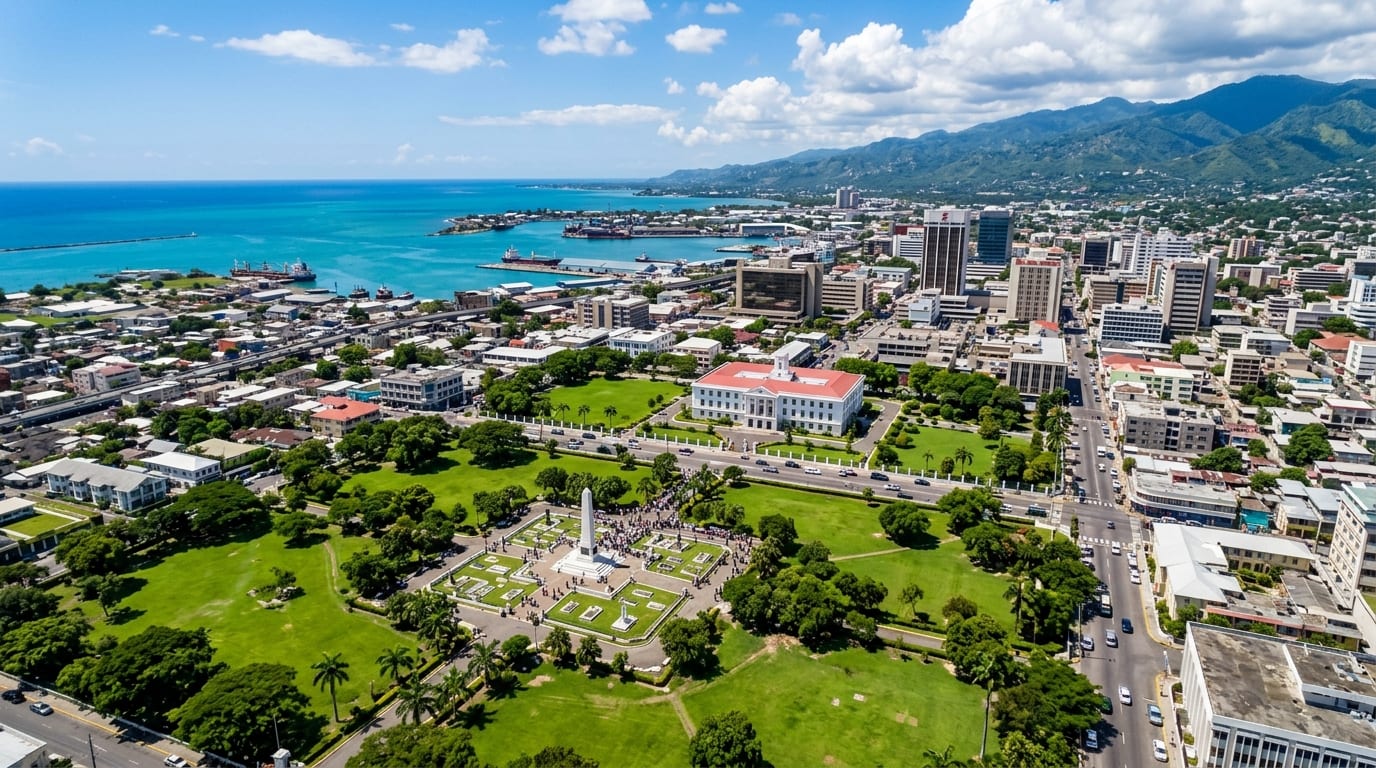
Prime Minister Andrew Holness has announced that the government is moving into the consultative phase for what is described as a major transformation project at National Heroes Park and the surrounding Parliament precinct in downtown Kingston — a development that could represent the most significant investment in the capital's civic infrastructure in decades.
What Has Been Proposed
The announcement, made during an address to Parliament this month, outlines a vision for the National Heroes Park area that goes beyond simple beautification. According to the Prime Minister's office, the proposal envisions a comprehensive reimagining of the park — which houses the monuments and tombs of Jamaica's National Heroes — and the integration of the surrounding Parliament buildings, Gordon House, and ministerial offices into a coherent, world-class civic precinct.
The consultative process will involve public engagement sessions, architectural design competitions, and stakeholder meetings with heritage preservation groups, civic society organisations, and Kingston's business community. No specific construction budget has been announced, but officials indicate that the project will proceed in phases, with the first phase focused on detailed planning, environmental impact assessments, and heritage preservation requirements.
The Significance of National Heroes Park
For Jamaicans, National Heroes Park is one of the most emotionally significant public spaces in the country. Located in downtown Kingston near the intersection of Arthur Wint Drive and National Heroes Circle, the park is the final resting place of Jamaica's seven National Heroes: Norman Manley, Alexander Bustamante, George William Gordon, Marcus Garvey, Nanny of the Maroons, Paul Bogle, and Sam Sharpe. Their monuments are pilgrimage sites for Jamaicans seeking to connect with the island's long history of resistance, leadership, and the fight for independence.
The park also functions as one of Kingston's most valuable open green spaces — a significant consideration in a city that, like many Caribbean capitals, has struggled to balance urban development with the preservation of public recreational areas. Every Independence Day, August 6th, the park serves as a focal point for national celebrations, with concerts, ceremonies, and cultural events drawing tens of thousands of people to the grounds.
Arguments For the Transformation
Proponents of the development argue that the National Heroes Park area has long been in need of investment. Parts of the park's infrastructure — pathways, lighting, facilities, and heritage monument maintenance — have deteriorated over years of insufficient public spending. The monuments themselves, while historically preserved, exist in an environment that has not kept pace with international standards for heritage sites.
The transformation proposal would also address the surrounding Parliament precinct. Gordon House, which houses the Jamaican Parliament, is a handsome colonial-era building, but the broader precinct lacks the dignity and functional coherence expected of a national legislative centre. A reimagined precinct — one that makes the area accessible, beautiful, and worthy of Jamaica's democratic institutions — could become a major civic asset and even a tourism attraction comparable to legislative precincts in other Caribbean capitals.
Economically, investment in downtown Kingston has long been a priority for governments seeking to reverse decades of commercial migration to New Kingston and the wider St. Andrew area. The transformation of National Heroes Park would bring construction employment to the city centre and potentially catalyse broader private sector investment in nearby commercial and residential properties.
Concerns: Heritage, Community, and Gentrification
Not everyone has received the announcement with unqualified enthusiasm. Heritage preservation advocates have raised questions about how the transformation will protect the integrity of the heroes' monuments and grave sites. Any significant construction or landscaping in proximity to these sites requires careful archaeological assessment and consultation with heritage authorities — steps that critics want to see formally built into the consultation process, not treated as afterthoughts.
Community voices from downtown Kingston have also expressed concern about whether the transformation will genuinely serve existing residents of the area, or whether it will displace informal vendors, community spaces, and low-income residents in favour of a polished civic showpiece that primarily benefits tourists and middle-class visitors. The history of urban redevelopment in Caribbean capitals is littered with examples of projects that beautified surface appearances while deepening the inequality beneath.
Prime Minister Holness addressed some of these concerns directly, emphasising that the consultative process is designed to ensure broad community input: "We are not imposing a vision from the top down. We want Jamaicans from every community to tell us what they want their National Heroes Park to look like and what it should mean for Kingston's future."
Looking Forward
Jamaica's capital deserves a civic heart that reflects the island's ambition, heritage, and pride. National Heroes Park, at its best, is a space where Jamaican history lives — where the sacrifices of the men and women who built this nation can be honoured by citizens and understood by visitors from around the world.
Whether the Holness government's transformation vision can achieve that potential while preserving what makes the park sacred — the quiet dignity of the heroes' monuments, the green openness of the grounds, the accessibility to all Jamaicans — will depend on how seriously the consultation process listens to all voices, not just the most powerful ones. Jamaica is watching, and so is the diaspora.